
Good conversation rarely begins with the perfect question alone. It also depends on whether people feel comfortable enough to answer honestly. Dinner table conversation starters work best when the room supports ease, attention, and shared participation. The table can quietly influence that atmosphere through light, layout, and a sense of welcome. When guests can see one another and reach what they need, they become less self-conscious. When the setting feels too formal, people may stay guarded. Small changes can make a large difference. A relaxed table gives people time to warm up naturally. It also allows quieter guests to join at their own pace. The room becomes part of the conversation.
Conversation feels forced when guests are cold, crowded, or unsure where to sit. Comfort creates the conditions for people to share more freely. Begin with chairs that feel stable and a table layout that leaves enough elbow room. Make water, napkins, and serving dishes easy to reach. These basic details prevent small discomforts from pulling attention away. You can also choose background music that stays low enough for everyone to hear. A welcoming intimate table styling plan considers how the evening will actually unfold. It puts human needs before visual perfection. That is the strongest foundation for real conversation.
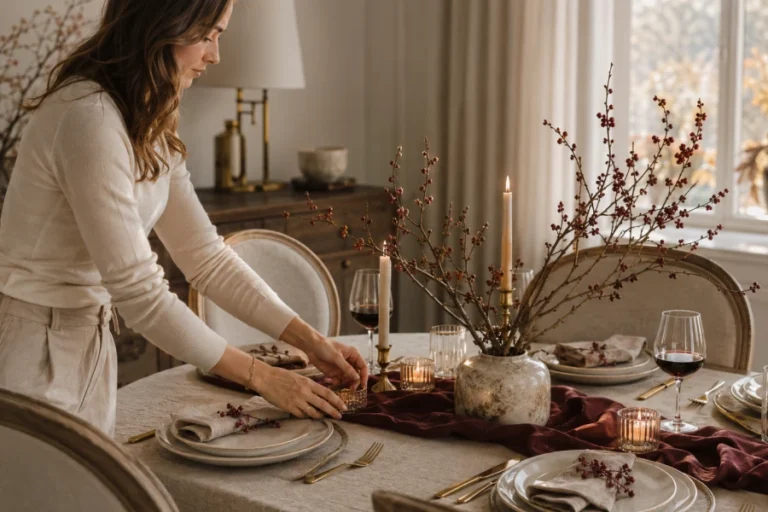
Guests connect more easily when they can see each other without obstacles. Keep centerpieces low, narrow, or off to one side if the table is small. Avoid placing tall bottles, large lamps, or decorative structures in the middle. Clear sightlines make it easier to read expressions and respond naturally. This matters especially when guests do not know one another well. A little visibility can reduce the awkward pause at the beginning of a meal. It also makes jokes, stories, and reactions feel more shared. Think of the center of the table as a pathway, not a stage. The more open it feels, the more connected the group can become.
People need time to arrive emotionally as well as physically. Start with easy, low-stakes topics before moving toward more personal stories. Offer a drink, a small snack, or a simple task that lets guests settle in. A relaxed opening removes pressure from the first exchange. You can build this mood through relaxed hosting rituals that feel natural to your group. Perhaps everyone chooses a tea, passes a shared dish, or notices a seasonal ingredient together. These moments create a common starting point. Then the conversation has somewhere to go. Pace is often more important than cleverness.
A communal table encourages people to contribute in small, comfortable ways. Passable dishes, shared condiments, and family-style serving can create gentle interaction. You do not need to turn the meal into an activity. Instead, give guests small chances to respond, offer, or ask. These gestures can make new people feel included without placing them in the spotlight. The table becomes more dynamic when everyone has a role in the flow. This approach also reduces the burden on the host to carry every conversation. People naturally start speaking when they are already participating. Shared food creates an easy bridge between silence and connection. That is one reason dinner tables remain powerful gathering spaces.
Visual warmth tells guests that the evening is meant to be enjoyed, not performed. Soft linens, warm light, and a restrained centerpiece can make the table feel more approachable. You do not need a particular style to create that mood. The most important quality is coherence. Let the colors, materials, and serving pieces feel like they belong together. A collection of welcoming table details can make even everyday dishes feel intentional. This visual calm helps guests focus on one another. It also gives the meal a sense of occasion without making it stiff. Good atmosphere quietly encourages better stories.
The best gatherings do not need to end with a dramatic final moment. Give people room to keep talking after the plates are cleared. Bring out tea, fruit, or a simple dessert that encourages everyone to stay seated. Avoid jumping immediately into cleanup if the conversation still has energy. This pause signals that the gathering is not only about the meal. It is about being together. A slower ending also gives quieter guests another chance to contribute. Let the table remain warm and useful for a little longer. When people leave feeling heard, the evening has done something more meaningful than feed them. It has created connection.



Leave a comment